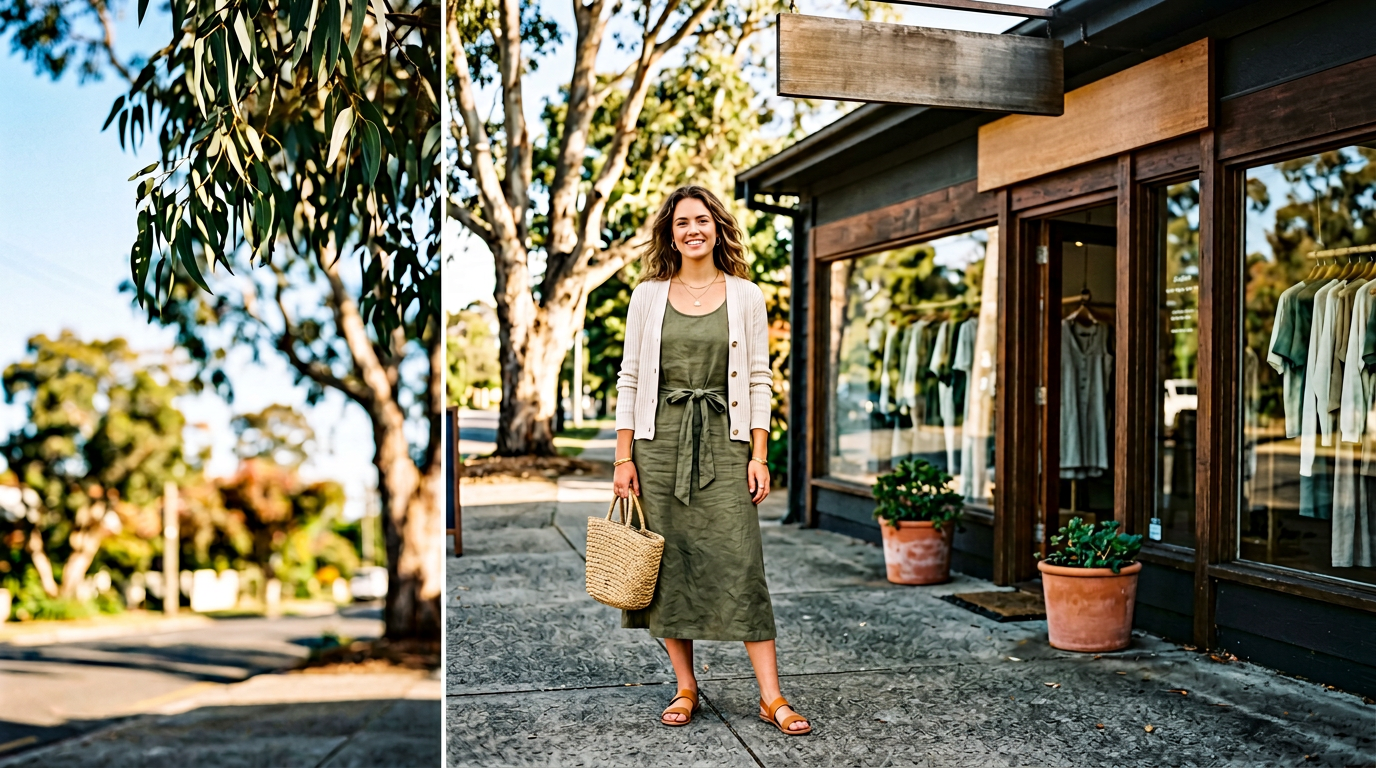
Sustainable fashion has moved from a niche interest to a genuine commercial category in Australia, driven by a generation of consumers for whom the origin and environmental cost of clothing has become a core purchasing consideration. Australian ethical fashion brands are expanding their retail presence, increasing production capacity, and attracting international attention — and the broader shift in consumer sentiment is forcing established retailers to respond with credible sustainability programmes of their own.
The scale of the shift is visible in the data. Industry survey data (including the Australian Fashion Council's annual research programme) indicates that approximately 68 percent of Australian consumers reported considering environmental impact when making clothing purchases. Survey figures are representative estimates; individual market research may vary. — up from 41 percent in 2019. More meaningfully, 44 percent reported that they had actively chosen a sustainable brand over a cheaper alternative in the previous six months. The gap between stated intention and purchasing behaviour has narrowed measurably, and the brands positioned to capture that shift are growing accordingly.
Bassike: Premium With Purpose
Bassike has built one of Australia's most recognised sustainable fashion identities over fifteen years, operating from its original Sydney base with a production model centred on certified organic cotton and a domestic manufacturing footprint that kept production in Australia when most competitors moved offshore. The brand's core proposition — premium basics with genuine material and process transparency — has proved durable across multiple retail cycles. Bassike now operates 14 stores across Australia and New Zealand and a growing international online presence, with particular traction in the UK and Japanese markets where its Australian provenance is itself a point of differentiation.
Citizen Wolf: Made-to-Order and Waste Reduction
Citizen Wolf approaches sustainability from a production model rather than a material angle. The Sydney-based company offers made-to-order garments using a proprietary body measurement algorithm — Magic Fit — that produces a custom fit from a brief digital questionnaire. By manufacturing only in response to confirmed orders, Citizen Wolf claims to generate virtually no unsold inventory, the primary source of waste in conventional fashion production. The brand manufactures in Sydney using Australian-grown cotton where possible and publishes its cost breakdowns publicly — a level of supply chain transparency that remains unusual in the industry. Its approach has attracted press in The Guardian, Business Insider, and Vogue, contributing to an international customer base that grew by 62 percent in 2025. Based on Citizen Wolf's published sales data.
Kowtow: New Zealand's Influence on Australian Ethical Fashion
New Zealand brand Kowtow has developed a strong Australian retail presence over the past decade, becoming one of the most widely stocked ethical fashion labels in Australian independent boutiques and a reference point for what certified fair trade organic cotton fashion looks like at a commercial scale. The brand's approach to organic cotton certification — it uses GOTS (Global Organic Textile Standard) certified fabrics throughout — has influenced how Australian consumers think about certification claims more broadly, raising the bar for what a meaningful sustainability claim requires.
Assembly Label and the Mid-Market Shift
Assembly Label occupies an important space in the Australian sustainable fashion ecosystem: it is neither a luxury brand nor a fast fashion alternative, but a mid-market label that has made sustainability credentials central to its identity without making the price point prohibitive. Founded in Melbourne, the brand has grown to 25 stores nationally and a significant online operation. Its transparency reports — published annually and covering supply chain, material sourcing, and carbon footprint — are among the more detailed in the mid-market segment and have contributed to a brand reputation that extends beyond its core Australian customer base.
The Secondhand and Resale Market
Parallel to the growth of sustainable new fashion, Australia's secondhand and resale market has expanded significantly. Platforms including Depop, Facebook Marketplace, and the Australian-founded The Volte (luxury fashion rental) have normalised circular fashion consumption among younger Australians in a way that would have been culturally marginal five years ago. Vinnies, the Salvos, and other op-shop networks report sustained increases in both donation quality and customer numbers as buying secondhand has lost its stigma.
The Swap app, launched in 2024, allows Australian consumers to exchange garments directly with other users — a peer-to-peer model that generates no cash transaction and therefore sidesteps the pricing friction that limits resale platforms. Early adoption has been concentrated among 18 to 30-year-olds, precisely the cohort most exposed to sustainable fashion messaging through social media, and the app reported over 180,000 registered users at its first anniversary.
The Gap That Remains
Despite genuine progress, the Australian sustainable fashion industry faces a structural challenge that its advocates are increasingly candid about: sustainable clothing is still significantly more expensive than conventional alternatives, and for the majority of Australian consumers managing cost-of-living pressures, price remains the dominant purchasing criterion. The brands making the most progress on closing the accessibility gap are those investing in scale economies and made-to-order models that reduce waste costs, rather than those relying on premium pricing to fund their sustainability credentials. The next phase of growth will depend on whether sustainable fashion can reach a broader Australian consumer without sacrificing the material and process standards that define the category.