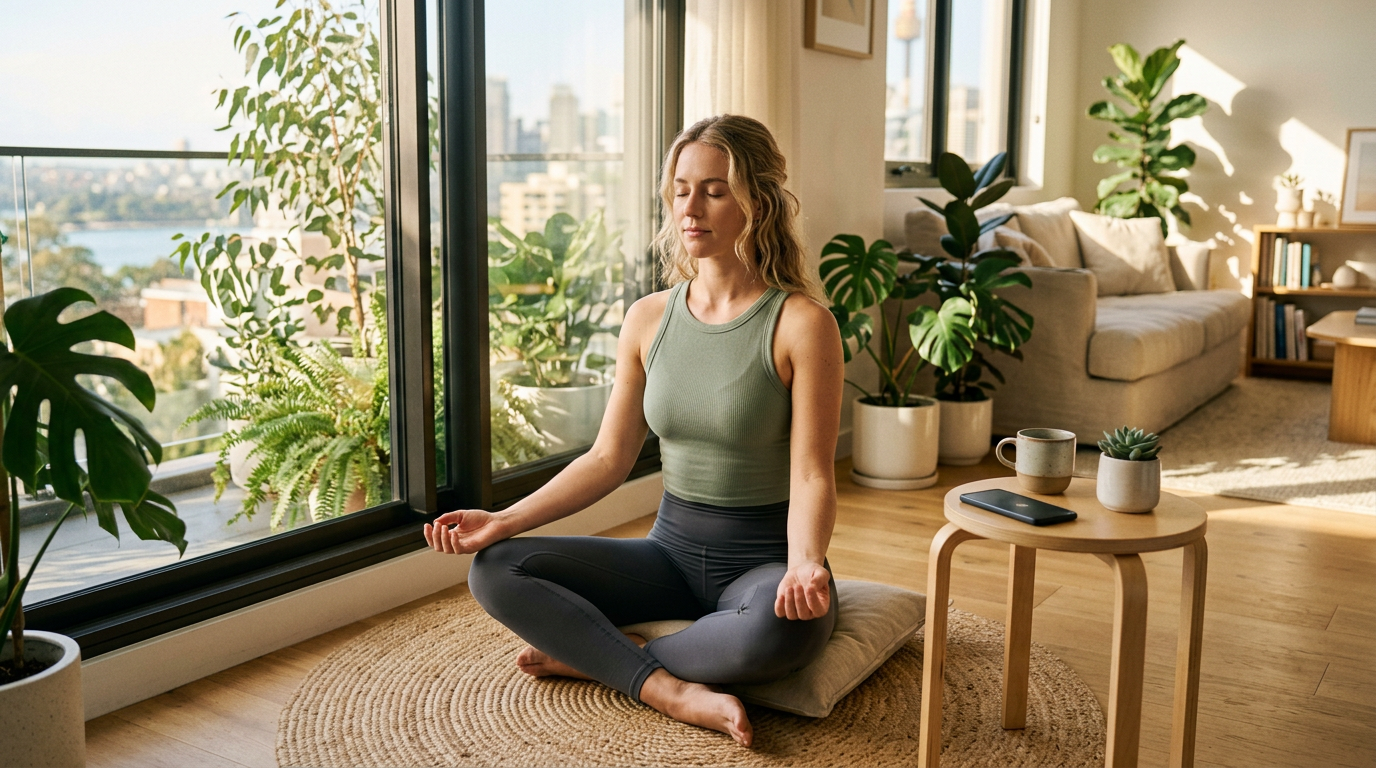
Mental wellness technology has moved from the margins of Australian professional life to something close to the mainstream. Downloads of mindfulness and meditation apps among Australian users increased by an estimated 38 percent in the 12 months to March 2026, based on publicly available app market trend analysis (Sensor Tower industry data), with the sharpest growth among working adults aged 28 to 45 — precisely the cohort managing the intersection of career pressure, family responsibility, and the lingering psychological residue of several years of pandemic disruption.
The shift is taking place against a backdrop of genuine urgency. Beyond Blue's 2025 National Workplace Wellbeing Index found that 55 percent of Australian workers reported experiencing high or very high levels of work-related stress in the previous 12 months — the highest figure since the survey began. Anxiety and depression together account for more than 6.5 million working days lost per year in Australia, at an estimated economic cost of AUD $12.2 billion annually. These are not abstract statistics; they are the context in which the technology is being adopted.
Smiling Mind: Australia's Own
The most distinctively Australian offering in the space is Smiling Mind, a not-for-profit app developed with input from psychologists and education professionals that has accumulated more than 10 million downloads and is actively used in schools, workplaces, and community organisations across the country. Unlike commercial competitors, Smiling Mind offers its full programme at no charge — a deliberate decision reflecting its public health mission. Its workplace programme, which provides a structured eight-week mindfulness curriculum alongside team-level analytics, has been adopted by several major Australian employers including Telstra, NAB, and a number of federal government departments.
The app's Australian context is a material advantage: its framing, language, and cultural references are calibrated for Australian users in ways that US-developed competitors sometimes are not. Research published in the Australian Journal of Psychology found that Smiling Mind users in workplace settings reported a 24 percent reduction in self-reported stress scores after completing the eight-week programme, with effects sustained at a 12-week follow-up. Based on internal programme data; individual results may vary.
Headspace: The Australian Co-Founder Connection
Headspace was co-founded by Andy Puddicombe, who grew up partly in Australia, and the app has maintained a strong Australian user base since its launch. Its professional tier — Headspace for Work — is now used by more than 2,800 organisations globally, including a significant number of Australian corporates in the financial services, mining, and technology sectors. The app's approach is grounded in clinical evidence: a 2021 study published in the Journal of Occupational Health Psychology, conducted in partnership with Headspace, found statistically significant reductions in burnout, stress, and absenteeism among workers who completed the structured programme over 60 days. Headspace for Work participants; results varied by use frequency.
The R U OK? Influence
Australia's R U OK? movement — now a registered charity with a national reach extending well beyond its September annual day — has had a quiet but genuine influence on how Australian workplaces approach mental health conversation. The movement's core message, that asking a colleague if they are okay is a meaningful act in itself, has normalised mental health as a workplace topic in a way that clinical programmes alone could not achieve. Several of the app developers operating in the Australian market have incorporated R U OK?-adjacent prompts and frameworks into their products specifically because research showed Australian users responding positively to the conversational rather than clinical framing.
What the Evidence Actually Shows
The evidence base for mindfulness technology in workplace contexts is more mixed than the marketing suggests, and Australian employers are increasingly asking the right questions before committing. The strongest evidence supports structured programmes — typically eight to twelve weeks of consistent daily practice — rather than occasional use. Apps that are opened twice a week for five minutes show negligible impact on clinical stress markers; apps that are used for at least ten minutes daily for more than six weeks show consistent effects on self-reported wellbeing, sleep quality, and anxiety scores in multiple peer-reviewed studies.
The honest version of the evidence is this: mindfulness apps work for people who use them consistently, and consistent use requires the kind of habit scaffolding that most busy professionals struggle to maintain without external structure. The most effective workplace implementations are those that embed the app within a broader programme — manager training, psychological safety assessments, flexible work policies — rather than treating it as a standalone solution to a systemic problem.
What Australian Employers Are Actually Doing
The range of employer responses to the wellbeing challenge is wide. At one end, some large Australian organisations have invested significantly in comprehensive EAP (Employee Assistance Programme) upgrades, digital mental health platforms, and manager training in psychological safety — a genuine investment in structural change. At the other end, some employers have adopted the language of wellbeing while making no material changes to the workloads, culture, or management practices that generate stress in the first place.
The most commonly cited marker of a genuine commitment, according to Beyond Blue's Heads Up workplace programme, is whether senior leaders visibly use and endorse the mental health tools on offer — not just in communications, but in behaviour. When a CEO shares that they use a mindfulness app or takes a mental health day, the signal to the organisation is material. When wellbeing initiatives are delegated entirely to HR without visible leadership engagement, uptake and impact are consistently lower.
For individual professionals navigating this landscape, the practical guidance is straightforward: the app matters less than the habit. Whichever tool fits your existing routines — whether that is Smiling Mind, Headspace, Calm, or a simple breathing exercise with no technology involved — the key variable is whether you do it daily for long enough to notice a difference. The evidence threshold is approximately six weeks of consistent use. Most people who reach that threshold report that the practice has become self-sustaining.